Royal Bank of Scotland told by MPs to explain £25bn accounting ‘distortion’ – Telegraph

The Telegraph picks up my Bill on bank accounting:

David Davis, the former Tory front bencher, and Steve Baker, the MP for Wycombe, have called for RBS to prove that its accounts are not being distorted by the controversial International Financial Reporting Standards (IFRS).

The letter, seen by The Daily Telegraph, details a disagreement between the MPs and RBS at a private meeting on May 24. The MPs argued that IFRS, which has been described as a “fatally flawed” system, is inflating the profits and capital position of RBS and other banks.

via Royal Bank of Scotland told by MPs to explain £25bn accounting ‘distortion’ – Telegraph.

A Bill to expose banks’ false profits, overstated capital and hidden losses

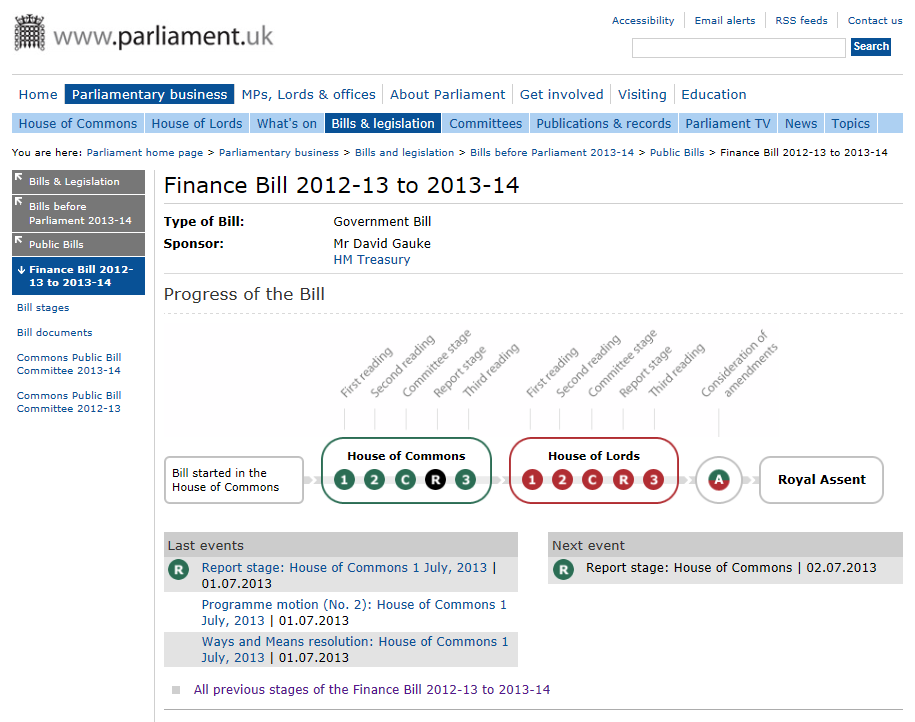
My Financial Services (Regulation of Derivatives) Bill has now been printed, ready for second reading on 10 June. You can obtain the PDF here and track the Bill’s progress here. The press release, including links to background evidence and press coverage, is here.

When I introduced my Bill on 15 March, I explained how the accounting rules for banks incentivize trading in derivatives by enabling unrealized profits to be booked up-front, leading to large but unjustified bonuses and dividends.

On 30th March, the House of Lords Economic Affairs Committee published a report recommending that the Government reassert prudence as a guiding principle. That is what my Bill does and I hope the Government will adopt it.

While complying with the rules, banks are producing accounts that grossly inflate their profits and capital in three ways. First, using IFRS mark-to-market and mark-to-model accounting, banks record unrealized gains in investments as profits. Second, IFRS prevents banks from making prudent provision for expected loan losses by allowing recognition only of incurred losses. Third, IFRS encourages banks not to deduct staff compensation from profits. Taken together, these flaws mean that banks’ accounts under IFRS are at once rule-compliant and dangerously misleading.

By way of example, we have deduced from the accounts of the UK Asset Protection Scheme that RBS may be overstating capital by as much as £25bn.

Boards take decisions based on their accounts. If the accounts are misleading, is it any wonder that boards and regulators are failing shareholders and taxpayers? The public are furious about the injustices manufactured by the banking system, and they are right to be, but how much greater is the injustice if grotesque bonuses are based on false profits?

Banks are living in a fools’ paradise in which their boards cannot get a firm grip on vital measures like capital and profit. That is plain wrong.

Thanks to the European Union, the UK cannot simply mandate prudent accounting in compliance with UK Companies Law but we can require parallel accounting to British standards while international negotiations proceed. That is why I am calling on the Government to adopt my Bill.

Debate on the Protection of Freedoms Bill

The Protection of Freedoms Bill is radical only in its moderation and extreme only in its conservatism. Nevertheless, it has been and remains a privilege to serve on the Bill Committee, for which you can find Hansard here.

I have made a number of contributions but I think I most enjoyed saying this:

Steve Baker: Following the exchange of interventions, which I very much enjoyed, and reflecting on the amendment, I am aware of a principle that comes out, which I think could be more deeply entrenched in the Bill. If we were to look for a principle and express it in one word, for me that word would be “property.” The amendment is quite insightful—although of course I will not be supporting it—by bringing together the questions of bailiffs and squatters. The hon. Member for Gedling has hit the nail on the head. The issue in talking about freedom is often property. However, we would struggle to be consistent about the application of property rights. Without wishing to stray out of order, Mr Caton, if we were to apply property rights to, for example, wheel clamping, we might have found ourselves obliged to continue allowing clamping on private property, which is not something that any of our constituents seem to want, unless they suffer from the problem of rogue drivers.

Returning to the amendment, I think the hon. Gentleman has proposed an insightful amendment. The principle that he is searching for, on which all freedom could be hung, is the concept of property, and I would invite the Government to consider that concept throughout the Bill.

I enjoyed slipping into using “commisars” too of course. The Bill Committee continues…

The Protection of Freedoms Bill

I attended much of the second reading debate on the Protection of Freedoms Bill today, conscious that liberty is still the subject about which I have written most, judging by the tag cloud, bottom right.

There’s much in the Bill to be glad about and I shall certainly support it but of course I would have liked it to do more. I discover that many of my colleagues are less concerned about these issues than I might have liked: we have come a long way since Pitt, Gladstone and Disraeli.

For example, from Pitt:

Necessity is the plea for every infringement of human freedom. It is the argument of tyrants; it is the creed of slaves.

Reagan was quite spectacular:

You and I know and do not believe that life is so dear and peace so sweet as to be purchased at the price of chains and slavery. If nothing in life is worth dying for, when did this begin — just in the face of this enemy? Or should Moses have told the children of Israel to live in slavery under the pharaohs? Should Christ have refused the cross? Should the patriots at Concord Bridge have thrown down their guns and refused to fire the shot heard ’round the world? The martyrs of history were not fools, and our honored dead who gave their lives to stop the advance of the Nazis didn’t die in vain. [...]

[...]

You and I have a rendezvous with destiny.

We’ll preserve for our children this, the last best hope of man on earth, or we’ll sentence them to
take the last step into a thousand years of darkness.

And indeed in our own country, we have departed far from the commitment to liberty which Churchill expressed here:

If you will not fight for the right when you can easily win without bloodshed; if you will not fight when your victory will be sure and not too costly; you may come to the moment when you will have to fight with all the odds against you and only a small chance of survival. There may even be a worse case: you may have to fight when there is no hope of victory, because it is better to perish than to live as slaves.

Still, lets take the improvements we can get…

Sceptical support for The Daylight Saving Bill

I’m waiting to vote on the second reading of the Daylight Saving Bill, a private member’s bill introduced by Rebecca Harris MP and promoted by Lighter Later. With considerable scepticism, I will be supporting the bill.

It seems to me that good arguments can be made either way on this Bill because the offset we use from solar time is fundamentally arbitrary. Solar noon is when the sun is highest in the sky. Some people prefer lighter mornings and some lighter evenings. Those who have a preference either way can find the arguments either way. I note that we live in a world where solar midday comes early in most people’s waking day and that this is the choice which has emerged over time. It tends to suggest people prefer lighter mornings…

Many of the more appealing benefits – someone lobbied me on the basis that I would be able to enjoy an extra hour’s sailing in the autumn, should I ever have another boat and escape Parliament – are ones which could be achieved through more flexible working. Flexible working, widely adopted, would for example, reduce congestion and therefore save CO2 (discuss). The point is that when we do the things we want to do is a matter of choice against a subjective scale of preferences.

Right – I think I shall go and listen to the minister in person.

Update: Having heard the minister, I would willingly vote it down but let’s have it in committee for public discussion. I may vote against at third reading.

Observations on a statutory instrument committee

I just completed my first act of scrutiny of legislation in committee for The Conduct of Employment Agencies and Employment Businesses (Amendment) Regulations 2010, which was drafted under the last government. It was an unedifying experience.

Having obtained and read the instrument beforehand, I considered that:

  • The Instrument was well-intentioned and thorough, or at least extensive, but imperfect.
  • A page of simple law might have been more effective.
  • Scrutinising ten pages of amendments to legislation is difficult to do without the context of the amended legislation (let’s call this “the Lisbon trick”).
  • There wasn’t time to thoroughly deconstruct the regulation beforehand.

So, about 20 MPs turned up, listened to two speeches and a response then nodded the SI through. Hardly inspiring for the man in the public gallery who has spent 13 years of his life campaigning to stop the exploitation of eager models through up-front fees, something the SI probably won’t stop, thanks to a loophole.  I suppose we will see.

It was all very “Yes, Minister”. Change required…