Razeen Sally, “Trade Policy, New Century”

This post originally appeared on cobdencentre.org.

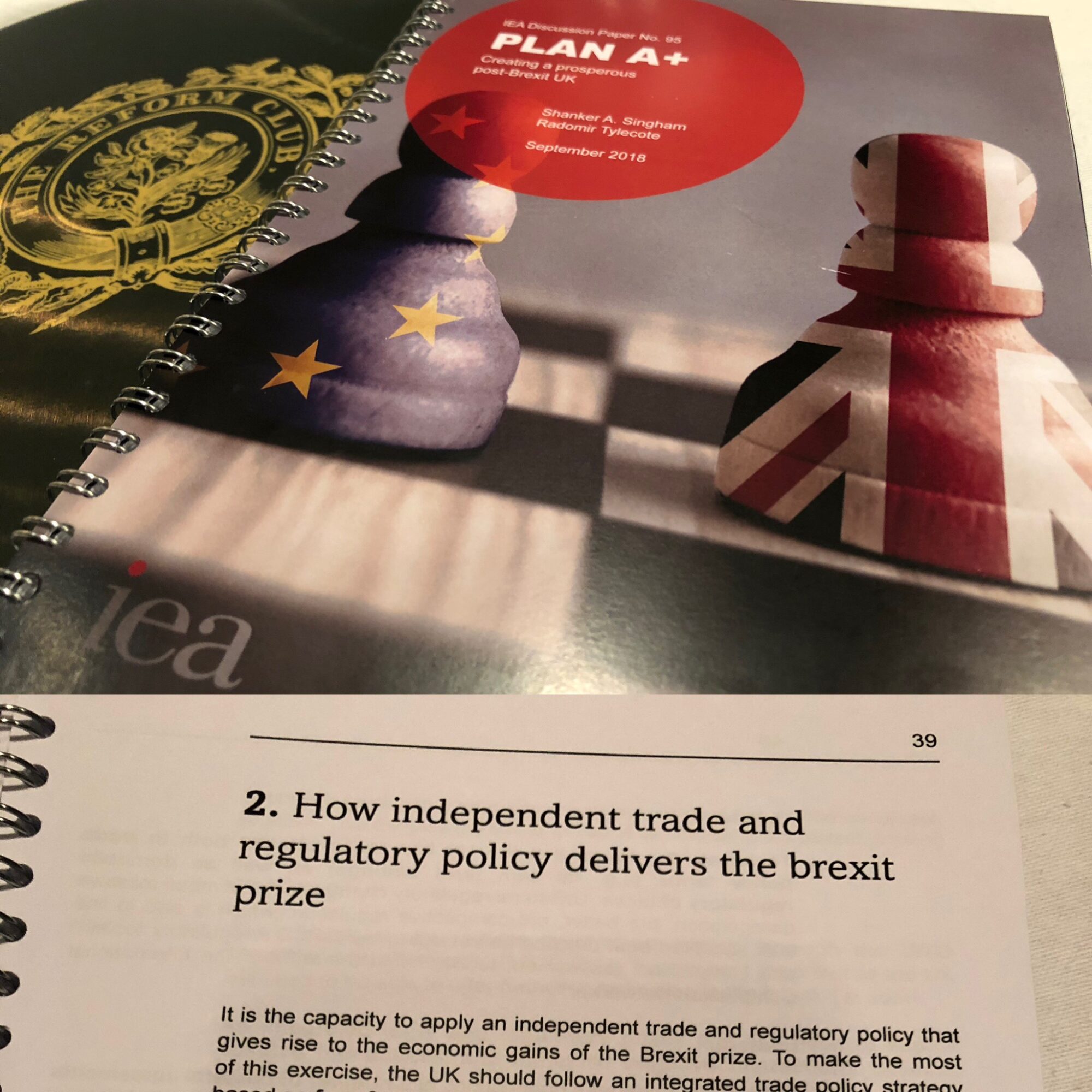
Razeen Sally’s Trade Policy, New Century (PDF) succeeds magnificently in explaining the 21st-century case for free trade and, specifically, unilateral trade liberalisation to the interested, non-specialist reader.

From the IEA home page of the book:

The World Trade Organization (WTO) is failing to deliver the trade liberalisation desperately needed to bring prosperity to developing countries, according to a new study released today by the Institute of Economic Affairs. The WTO is hamstrung by a cumbersome negotiating model and the influence of vocal protectionist lobbies who oppose free markets. At the same time, increasingly popular regional ‘free-trade agreements’ often create as many barriers as they remove by erecting new obstacles to trade with countries outside the blocs concerned.

In the context of policy paralysis at the WTO, the author, LSE trade expert Dr Razeen Sally, argues that governments must take back the initiative from supranational institutions. The priority must be unilateral liberalisation – removing trade barriers to benefit domestic consumers rather than waiting for tortuous international negotiations to be resolved. Governments can also help maximise the benefits of free trade by liberalising their economies and strengthening key institutions.

But what is the imperative for the UK? Surely, European Union citizens enjoy free trade?

The EU is a customs union: we trade ostensibly freely within it, but, as can be seen from the EU’s TARIC database, we find ourselves behind a complex system of tariffs on, for example, wheat, notwithstanding the battle long since won by our inspiration, Richard Cobden, to repeal England’s Corn Laws in the general interest.

And this is the key point: free trade is in the general interest. We may make the political and economic arguments in detail, but the public good is our ultimate aim, and not just at home. Razeen Sally explains (pp179-180, emphasis mine):

Adam Smith fortified his presumption in favour of free trade with an explicit political argument. Protectionism is driven by ‘the clamorous importunity of partial interests’ who capture government and prevent it from having ‘an extensive view of the general good’. Free trade, in contrast, tilts the balance away from rent-seeking producer interests and towards the mass of consumers. It is part of a wider constitutional package to keep government limited, transparent and clean, enabling it to concentrate better on the public good.

As important to Smith and Hume was the moral case for free trade, centred on individual freedom. Individual choice is the engine of free trade, and of progressive commercial society more generally. It sparks what Hume called a ‘spirit of industry’; it results in much better life-chances, not just for the select few but for individuals in the broad mass of society who are able to lead more varied and interesting lives.

To sum up: free trade is of course associated with standard economic efficiency arguments. But the classical-liberal case for free trade is more rounded, taking in the moral imperative of individual freedom and linking it to prosperity. Finally, free trade contributes to, though it does not guarantee, peaceful international relations. Freedom, prosperity, security: this trinity lies at the heart of the case for free trade.

In a short article, I can scarcely do justice to this monograph’s insight in relation to the case for classic liberalism nor to its observations on emerging geopolitics: I heartily recommend the book.

Further reading

The economy not Europe is my priority, says David Cameron

Via The Telegraph:

David Cameron, the Conservative leader, has pleaded with his MPs and voters to allow him to concentrate on fixing the fragile British economy if he becomes Prime Minister rather than having “a massive Euro bust up” over the Lisbon Treaty.

Many of us with an international perspective on human cooperation have strong, principled objections to a government that cannot be dismissed at the ballot box. However, David Cameron is right: the clear and present threat to the livelihoods of British people is the state of the economy, not the EU. And George Osborne is right: we need an economy based on save and invest.

Consider the analysis provided by my Cobden Centre colleague, Ewen Stewart:

Cobden CentreEquity Strategist Ewen Stewart makes the case that the national debt will within 5 years be over £150,000 per family of 4 with debt repayments of twice the present defence budget, up from £31 billion in 2008/9 to £70 billion in 2013/14. He explains the root causes of our difficulties and indicates a route to recovery.

It’s all over. What a fuss about nothing. The economy will soon be growing again and, look, the FTSE100 is up almost 50% since the March low. Even house prices, according to the Halifax, have risen 6 months in a row. The doom mongers were wrong. Central Banks and Keynesian public spending programmes, together with QE, have worked. Brown indeed has saved the world!

Well that would be one interpretation and a very short sighted one too, for this recovery shows all the hallmarks of a drug addict who claims to be going straight injecting a further mighty dose of the substance that has caused such decay in the first place to prolong the party.

The problem is that the underlying fault lines in the UK economy remain and, thanks to the Government’s response, are even more pronounced.

I thoroughly recommend the entire article: Happy days are here again? Another view from the City » The Cobden Centre.

We simply cannot allow ourselves to slip and let Labour retain power. Everyday British people cannot afford a hung Parliament. We must win strongly and deal with the most urgent and important problem before us: a wrecked economy.

We cannot escape our fate by sticking with Labour’s insensible reactionary fear. We must think.

We cannot keep creating new money: it would eventually destroy the economy completely1:

Continuously injecting additional amounts of money where it creates temporary demand, together with an expectation of continuously rising prices, draws labour and resources into use in areas which will last only as long as the supply of new money. These policies bring about not so much a raise in the level of employment, but a distribution of employment which cannot last and which eventually can only be maintained by ruinous levels of inflation.

We cannot keep borrowing from future generations: it is just plain wrong and the markets would stop us.

We cannot grow a healthy society by simply seizing the wealth of one and giving it to another. Try doing that with your children’s sweets: you will get little more than screaming, sobbing and tearful mumbling. It is a dead end.

Ewen’s article sets out his policy prescriptions. The way out is the grown-up way: working, saving and investing.

So here is the greatest danger this country faces: a Labour government of childish fantasists who know nothing about creating real prosperity and everything about appearing strong before the camera. They are failing us all: it is tragic.

As my friend Chris Neal — a man with a big heart for the poor and CEO of charity GB Job Clubs — has written of Labour, bringing Cromwell up to date:

It is high time for me to put an end to your sitting in this place, which you have dishonoured by your contempt of our democracy, and defiled by your practice of top down government; ye are a factious crew, and enemies to all good government; ye are a pack of mercenary wretches, and would like Esau sell your country to the Brussels federalists for a mess of pottage and a title; and like a Judas betray your Queen and country for a few pieces of money; is there a single virtue now remaining amongst you?

Is there one vice you do not possess? Ye have no more sense of democracy than my horse; you have sold our Gold; which of you have not barter’d your conscience for the whips? Is there a man amongst you that has the least care for the good of the Commonwealth? Ye sordid prostitutes have you not defil’d this sacred place, and turn’d Parliament into a den of impotent lickspittles, by your immoral principles and wicked practices?

Ye are grown intolerably odious to the whole nation; you were deputed here by the people to get grievances redress’d, are yourselves become the greatest grievance. Your country therefore calls upon me to cleanse this Augean stable, by putting a final period to your iniquitous proceedings in this House; and which by God’s help, and the strength he has given me, I am now come to do; I command ye therefore, upon the peril of your lives, to depart immediately out of this place; go, get you out! Make haste!

Ye venal slaves be gone, not to Brussels by Eurostar but to your shires to beg the forgiveness of the people you purport to represent! So! Take away that shining bauble there, and lock up the doors. In the name of God, go!

Further Reading

  1. See The pretence of knowledge which explains how economists come to make astrologers look good. []

Ireland votes yes to Lisbon treaty | World news | guardian.co.uk

Via Ireland votes yes to Lisbon treaty | World news | guardian.co.uk :

In a dramatic political U-turn, Ireland has voted decisively in favour of the Lisbon treaty just 16 months after it first rejected the European Union reform plan.

With counting continuing this evening it was expected that 64% of those who voted in Friday’s referendum would have backed the treaty.

But I don’t like this result: best two out of three?

Now expect to hear Eurocrats celebrating the democratic will of the Irish people…

In a related message, David Cameron has sent this to supporters (emphasis mine), explaining how difficult a Conservative win will be to secure:

Our Conference starts in Manchester this weekend. It’s going to be the most vibrant and exciting for years.

Next week, we won’t be playing it safe – instead we will be offering bold plans to deal with the big problems the country faces.

Labour spent their conference talking only to themselves – not the country.

In contrast you will see a Conservative Party united, determined and ready to deliver the bold, tough and radical change Britain needs.

Labour are now the party of unemployment – at this conference we will show that we are the party of new jobs and new opportunities.

To deal with Labour’s Debt Crisis we will be setting out some of the tough decisions that need to be taken and unlike Gordon Brown we won’t duck them.

To give people hope for the future the country needs to change direction, and our Conference will show how we’re ready to make that change.

But there is absolutely no complacency.

Every member of the Conservative Party needs to remember the following: the Conservatives have never won a General Election from a starting point as difficult as we face now.

To win a majority, we must hold every seat we won in 2005 plus an additional 117 constituencies. This would be the biggest number of Conservative gains at a General Election since 1931.

We can do it: but we are going to have to work incredibly hard for every vote, every day between now and polling day. In this election, every vote will count.

This weekend we will hear the results of the referendum in Ireland on the re-named EU Constitution.

I want to make one thing clear: there will be no change in our policy on Europe and no new announcements at the Conference. There will be no change in Conservative policy as long as the Lisbon Treaty is still not in force. The Treaty has still not been ratified by the Czechs and the Poles. The Czech Prime Minister has said that the constitutional challenge before the Czech Constitutional Court could take 3-6 months to resolve.

I have said repeatedly that I want us to have a referendum. If the Treaty is not ratified in all Member States and not in force when the election is held, and if we are elected, then we will hold a referendum on it, we will name the date of the referendum in the election campaign, we will lead the campaign for a ‘No’ vote.

If the Treaty is ratified and in force in all Member States, we have repeatedly said we would not let matters rest there. But we have one policy at a time, and we will set out how we would proceed in those circumstances if, and only if, they happen.

This is going to be a great Conference. I look forward to seeing many of you in Manchester.

Well, I’m off to Manchester tomorrow where I will be chairing three joint fringe debates for the Smith Institute and the Centre for Social Justice on the bank bailouts, housing and insolvency. Looking forward to it.

Would you ratify the Lisbon Treaty?

Via Times Online: Referendum on Europe.

The ever-generous Irish government has offered its citizens a second chance to ratify the Lisbon Treaty after the population spurned the opportunity last year.

A yes vote from Ireland, and indeed Britain if the chance ever arrived, looks increasingly likely to mean Tony Blair will become the first president of Europe.

If No. 10 was to give us the same chance, would you vote to adopt the treaty?

The Times has kindly made the poll available for embedding:

Comment Central – Times Online – WBLG: What the Conservatives should do about Europe

I am constantly amazed by the equivocation of people who really should understand the importance of being able to dismiss a government at the ballot box.

I love Europe. I want deeper, freer relations among European people — all people for that matter — but I am not prepared to surrender democratic control of power in order to install a government which plans to force what could happen naturally. And yet here is Daniel Finkelstein’s view:

Second, they risk looking unreasonable and obsessive about Europe. While resisting the treaty before ratification was completely correct, resisting it after ratification risks Cameron’s image as a moderate person, fit to govern, someone who gets things in proportion.

Read more at Comment Central – Times Online – WBLG: What the Conservatives should do about Europe.

At this point, all we can do is hope that either the Irish vote no or that the Cameron team has a good answer up its sleeve. Otherwise, we may find ourselves locked into a failed and failing superstate.

EU: is Britain still a sovereign state? – Telegraph

Very nearly beyond parody:

According to research by the TaxPayers’ Alliance (TPA), there are currently 16,980 EU acts in force and between 1998 and 2007 there was a net gain of 9,415 EU laws. In 2007, 3,010 EU laws became UK law, while only 993 EU regulations were repealed – a net gain of 2,017 extra laws.

The pace at which new EU laws were promulgated also increased at a record speed, with a net gain of over 2,000 new laws in both 2006 and 2007, compared to an annual average net gain of only 942 new laws between 1998 and 2007. Almost half of the extra 9,415 EU laws created in the 10 years to the end of 2007 were introduced in 2006 and 2007. Ben Farrugia, a policy analyst at the TPA, says: “Despite EU rhetoric about reducing regulation, it is growing at a record rate.”

via EU: is Britain still a sovereign state? – Telegraph.

Am I a criminal? I haven’t a clue.

Moreover:

In many ways the numbers are irrelevant since one very bad law imposed by Brussels would outweigh a dozen footling changes emanating from Westminster. What is really at issue here is the question of sovereignty: when a law follows the EU route it is rarely scrutinised properly and cannot be changed. The connection between those who vote and those who pass our laws, the very foundation of democracy, is broken.

EU faces ‘existential’ danger from economic crisis – Telegraph

This morning, I woke early and finished The Great European Rip-off: How the Corrupt, Wasteful EU is Taking Control of Our Lives.  I then discovered this article in the Telegraph:

The global financial crisis has inflicted such damage to free market principles that it risks undermining the core function of Brussels and triggering the disintegration of the European Union, according to the EU’s most revered economic figure.

Former Italian premier Massimo D’Alema said the EU’s modernisation drive sketched at Lisbon in 2000 was fantasy. “We are prisoners of our rhetoric,” he said. “It is an illusion to think that once crisis is over we will return to where we were. The US and China will emerge stronger: we will be left ever further behind. Within 15 years not a single country in the EU will qualify for the G7, except perhaps Germany.”

via EU faces ‘existential’ danger from economic crisis – Telegraph.

In this context, it is vitally important to form a strictly pragmatic view of the EU and whether it will help or hinder our recovery.

Craig and Elliott wrestle courageously to deliver just that in The Great European Rip-off, though the title rather gives away their conclusions. It seems to me any objective review of the EU would conclude that it is an exorbitantly expensive threat to our prosperity and freedom.
Read more

Promoting ‘a country called Europe’

In so many ways, wrong:

New Research: EU diplomats spend £3.4 billion promoting ‘a country called Europe’

  • EU foreign service now costs £3.4 billion a year
  • The property portfolio of EU embassies is worth £55 million
  • EU ambassadors earn up to £244,000 a year
  • Former ambassador to Washington DC expresses concern at report’s findings

A new study by the TaxPayers’ Alliance reveals the huge size, scope and cost of the EU’s own diplomatic service, which has quietly grown to effectively challenge the British Foreign Office around the globe. The report, which includes a foreword by Sir Antony Acland KG, GCMG, GCVO, former UK ambassador to the USA between 1986 and 1991, exposes the way in which the European Union’s External Relations programme has used huge quantities of British taxpayers’ money to progressively usurp the nation’s global standing.

via The TaxPayers’ Alliance – Campaign: New Research: EU diplomats spend £3.4 billion promoting ‘a country called Europe’ .

CentreRight: One hundred reasons why Ireland should say ‘no’ (again) to Lisbon

Via CentreRight: One hundred reasons why Ireland should say ‘no’ (again) to Lisbon:

Jim McConalogue, Editor of The European Journal and occasionally of this parish, has listed one hundred reasons why Ireland should again reject Lisbon. It was disclosed at the weekend that Ryanair are helping to bankroll the ‘Yes campaign’ which current opinion polling suggests is on course for victory.

Read more here, and if you have not done so, it is well worth watching Daniel Hannan’s speech to the Conservative Party Conference last year here.

It is indeed an incredible thing that ostensible advocates of democracy are prepared to support the Lisbon Treaty. Ladies and gentlemen, the EU will be what is laid down in its Constitution, and that is a state whose ultimate and active originators of law cannot be dismissed at the ballot box.

As Karl Popper said:

You can choose whatever name you like for the two types of government. I personally call the type of government which can be removed without violence “democracy”, and the other “tyranny”.

Selling illegal DVDs not illegal because of blunder – Telegraph

Via Selling illegal DVDs not illegal because of blunder – Telegraph:

People who sell DVDs and videos illegally, including pornography to children, cannot be prosecuted because of a legislative blunder dating back 25 years, it has emerged.

The blunder centres on the 1984 Video Recordings Act which the then British Tory Government should have notified with the European Commission but failed to do so.

The technicality means the act is unenforceable and urgent action is now under way to notify Europe and re-enact the legislation.

I am amazed that coverage of this Whitehall farce does not ask the obvious question: how did it come to this, that our legislature cannot make a law in our own land without notifying an overseas power, and an unelected one at that?

In the meantime, how is it possible that reenactment will take three months? Should we not recall Parliament, pass the Act again and then debate how Parliament and the British system of government has come to this sorry state?

Some favourite quotes from Karl Popper

Karl Popper is without doubt my favourite character in political philosophy. He was rational, believing knowledge and truth to be objective, but aware of the boundaries of reason. A scientist but concerned with the mechanisms of society. By humanitarian inclination a social democrat — when that meant “Marxist” — but by reason a liberal: a believer in freedom.

In the course of things, I rediscovered these quotations by Popper, which seem apt today, as we hastily seek solutions to our present difficulties:

I see now more clearly than ever before that even our greatest troubles spring from something that is as admirable and sound as it is dangerous — from our impatience to better the lot of our fellows.

Perhaps one from his time, when the foolish utopian experiment communism was still alive in the world:

It seems to me certain that more people are killed out of righteous stupidity than out of wickedness.

And defining ‘tyranny’:

You can choose whatever name you like for the two types of government. I personally call the type of government which can be removed without violence “democracy”, and the other “tyranny”.

On the role of intellectuals:

Why do I think that we, the intellectuals, are able to help? Simply because we, the intellectuals, have done the most terrible harm for thousands of years. Mass murder in the name of an idea, a doctrine, a theory, a religion — that is all our doing, our invention: the invention of the intellectuals. If only we would stop setting man against man — often with the best intentions — much would be gained. Nobody can say that it is impossible for us to stop doing this.

On historicism, but more generally applicable to positivism in economics: trying to produce specific outcomes when ultimately you can only do so by manipulating the actions of individual men and women:

We may become the makers of our fate when we have ceased to pose as its prophets.

On freedom and tolerance:

The so-called paradox of freedom is the argument that freedom in the sense of absence of any constraining control must lead to very great restraint, since it makes the bully free to enslave the meek. The idea is, in a slightly different form, and with very different tendency, clearly expressed in Plato.

Less well known is the paradox of tolerance: Unlimited tolerance must lead to the disappearance of tolerance. If we extend unlimited tolerance even to those who are intolerant, if we are not prepared to defend a tolerant society against the onslaught of the intolerant, then the tolerant will be destroyed, and tolerance with them. — In this formulation, I do not imply, for instance, that we should always suppress the utterance of intolerant philosophies; as long as we can counter them by rational argument and keep them in check by public opinion, suppression would certainly be unwise. But we should claim the right to suppress them if necessary even by force; for it may easily turn out that they are not prepared to meet us on the level of rational argument, but begin by denouncing all argument; they may forbid their followers to listen to rational argument, because it is deceptive, and teach them to answer arguments by the use of their fists or pistols. We should therefore claim, in the name of tolerance, the right not to tolerate the intolerant. We should claim that any movement preaching intolerance places itself outside the law, and we should consider incitement to intolerance and persecution as criminal, in the same way as we should consider incitement to murder, or to kidnapping, or to the revival of the slave trade, as criminal.

So let us be tolerant then, but only up to the point our open society is threatened, and let us also be reasonable:

There are many difficulties impeding the rapid spread of reasonableness. One of the main difficulties is that it always takes two to make a discussion reasonable. Each of the parties must be ready to learn from the other. You cannot have a rational discussion with a man who prefers shooting you to being convinced by you.

And also, thinking of the sacrifices we are invited to make today for the future — I think particularly of the world’s desperately poor, who need inexpensive energy1:

Do not allow your dreams of a beautiful world to lure you away from the claims of men who suffer here and now. Our fellow men have a claim to our help; no generation must be sacrificed for the sake of future generations, for the sake of an ideal of happiness that may never be realised.

We might reflect on whether we are still permitted to apply our intelligence in every area:

The open society is one in which men have learned to be to some extent critical of taboos, and to base decisions on the authority of their own intelligence.

And whether we are succumbing to the temptation to rely on the government for our security at the expense of our freedom:

We must plan for freedom, and not only for security, if for no other reason than only freedom can make security more secure.

Most schemes of social organisation have been explored and lived through, but one thing is certain: those who follow us will have different ideas and preferences which we cannot know in advance. We must allow room for our successors to develop these ideas and preferences, that is:

We must go on into the unknown, the uncertain and insecure, using what reason we may have to plan as well as we can for both security and freedom.

  1. And we are not far behind. []

EU soldiers raise the 12-star flag to inaugurate the European Parliament – Telegraph Blogs

You remember the sole and fairly meagre change made when the European Constitution was revived as the Lisbon Treaty? That’s right. The EU’s national emblems were taken out: its flag, anthem, national day and so on.

via EU soldiers raise the 12-star flag to inaugurate the European Parliament – Telegraph Blogs.

Extradition without justice | Anita Coles | guardian.co.uk

Via Extradition without justice | Anita Coles | Comment is free | guardian.co.uk :

Liberty believes, as did the UK parliament for many years, that no one should be extradited unless and until the requesting country makes out a basic case against them in a UK court. Failure on this front can result in an innocent person being sent halfway across the world – away from family, supporters and legal advisers – to face unsound, trumped-up or politically motivated charges, to say nothing of probable pre-trial imprisonment. This can and does happen under the European arrest warrant.

EU: A UK referendum on Lisbon becomes more likely

Via We are no longer crucial. We are marginal again — unless we say ‘No’ to the Lisbon Treaty – Analysis, Opinion – Independent.ie, we learn that full ratification of the Lisbon Treaty will be further delayed, making a UK referendum under a Conservative government more likely:

The implications of this week’s judgment on the Lisbon Treaty by the German Constitutional Court are profound for the whole of Europe and raise many questions, both for Germany and for all member states, whether or not they have it ratified. In light of the many sober messages given ‘in the name of the German people’ by the seven judges, it is difficult to see how the largest state in the European Union can rush headlong into the political processes that the court requires of the state, though this seems to be the intention and may well be the outcome.

Ireland commissioner says most EU countries would reject Lisbon Treaty – Telegraph

Ireland’s EU Commissioner, Charlie McCreevy, has conceded that voters in most EU countries would reject the stalled Lisbon Treaty.

via Ireland commissioner says most EU countries would reject Lisbon Treaty – Telegraph.

Conservative MEPs form new ‘anti-federalist’ group in the European Parliament – Telegraph

Great news:

Two weeks after the European elections returned 26 Conservatives David Cameron has fulfilled his controversial pledge to form a new bloc large enough to qualify for full recognition in Strasbourg.

The new grouping brings together centre-right MEPs from eight EU countries under the name “European Conservatives and Reformists Group”, with the UK Tory faction as the biggest single national element.

via Conservative MEPs form new ‘anti-federalist’ group in the European Parliament – Telegraph.

Gordon Brown surrenders key powers over financial regulation to Brussels – Telegraph

The European Commission and other EU officials are celebrating after the Prime Minister accepted on Thursday night the creation of European supervisors over national regulators.

Senior EU officials described how in return for a promise that Brussels regulators can not have power to tell the British government when, and by how much, to bail out banks, Mr Brown has given ground on a broad range of other supervisory powers.

via Gordon Brown surrenders key powers over financial regulation to Brussels – Telegraph.

See also King seeks empire and EU ‘risks lagging US on regulation’.

European election results by votes and seats

With 63 of 69 seats declared:

European Parliament results 2009

As Mark Mardell writes:

It’s an important result. As a whole it confirms the mood of the British electorate towards the EU. It is also significant in terms of its impact on the Conservatives. It is pretty clear if you compare the local elections with the Euros that the Conservatives lost votes to UKIP. They want those votes back in time for a general election. So if there was ever any argument for them soft-pedalling their hard line on the EU it’s gone. Those who’ve argued for a range of policies, pulling out of the centre-right group, arguing for a referendum, for a new relationship with the EU, will have their hand strengthened.

via BBC – Mark Mardell’s Euroblog. Mardell also writes of the EU-wide failure of social democracy, a failure which should surprise no one familiar with the political economy of freedom and equality before the law.

Speech of the President of the Czech Republic Václav Klaus in the European Parliament

As we approach leaving the EPP, let’s remember someone else who gets it:

We must say openly that the present economic system of the EU is a system of a suppressed market, a system of a permanently strengthening centrally controlled economy. Although history has more than clearly proven that this is a dead end, we find ourselves walking the same path once again. This results in a constant rise in both the extent of government masterminding and constraining of spontaneity of market processes. In recent months, this trend has been further reinforced by incorrect interpretation of the causes of the present economic and financial crisis, as if it were caused by free market, while in reality it is just the contrary – caused by political manipulation of the market. It is again necessary to point to the historical experience of our part of Europe and to the lessons we learned from it.

via Václav Klaus – Speech of the President of the Czech Republic Václav Klaus in the European Parliament.

Why the Conservatives are right for the European Union

The Tory leader also turned his fire on bureaucratic over-reach in the EU, which he said was driven by “the desire for harmonisation and homogenisation – on tax, on regulation, on so many aspects of public and private life”.

And he added: “It is the last gasp of an outdated ideology, a philosophy that has no place in our new world of freedom, a world which demands that we fight this bureaucratic over-reach and lead Europe into the hope and potential of a new, post-bureaucratic age.”

via BBC NEWS | Politics | Cameron targets ‘freedom enemies’.